 Voir le Monde avec les yeux du futur
Thoughts after my trip to China, June 2026, By Sébastien Périmony, France
“The man of old has gone, riding the yellow crane.
All that remains here is the Yellow Crane Tower.
The yellow bird, once it has left, never returns.
For a thousand years, white clouds have been drifting in the void.
Under the clear sky, the trees of Hanyang stand out sharply.
On Parrot Island, fragrant grass abounds.
At dusk, where is my homeland?
On the river, mists and waves sadden the heart.”
The Yellow Bird Tower of Cui Hao (703 AD) (1)
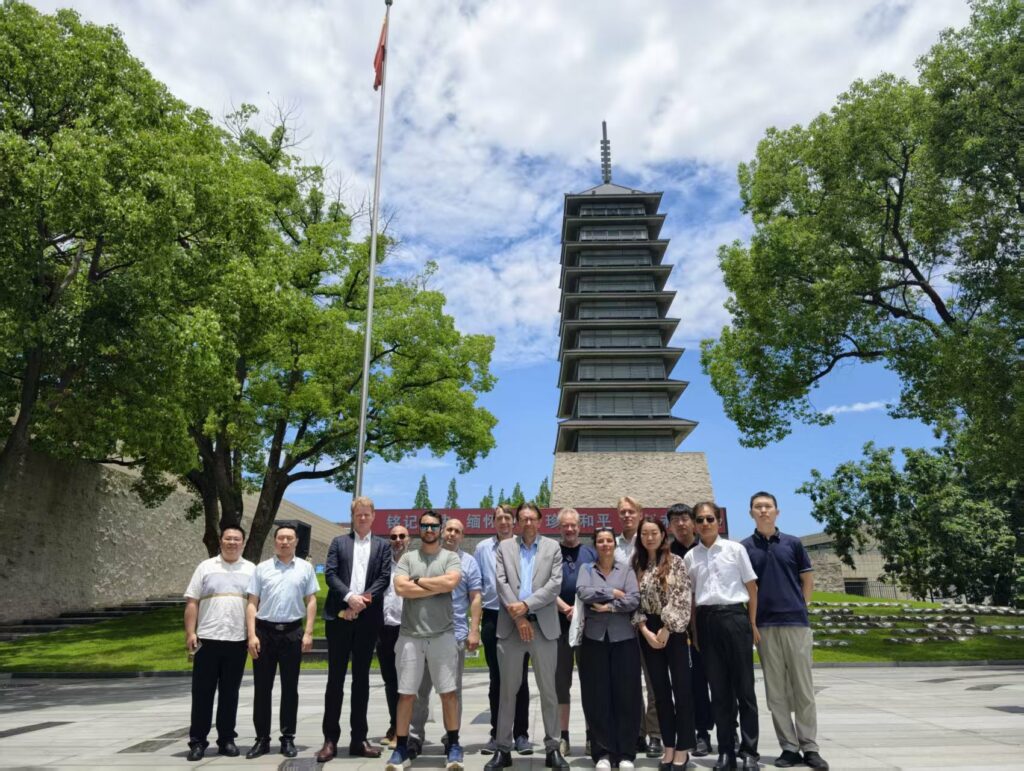
From June 1st to 11th, 2026, a delegation of Europeans, of which I was fortunate enough to be a part, was invited to discover China by the Chinese Association for International Understanding (CAFIU). (For the full list of delegation members, see note (2).
We first visited Dunhuang, the historic Silk Road city in Gansu Province. Then we traveled to Wuhan in Hubei Province, in central China, along the Yangtze River, before taking the high-speed train to Shanghai, the city of 27 million inhabitants where the Chinese Communist Party was founded and which has since become China’s financial center.
I. Dunhuang, Gansu Province
During our visit to Dunhuang, the 3rd World Conference of Sinologists was taking place, bringing together experts from around the globe to study China’s centuries-old culture. The theme was « Pooling the Knowledge of Civilizations to Address Together the Challenges of Our Time. »
A vast program and a noble ambition, which contrasted immeasurably with the week I had spent in Moscow participating in the international security forum before my departure for China. To give you a glimpse of this, I need only share the introductory remarks of this forum by Sergei Naryshkin, the Director of the Foreign Intelligence Service of the Russian Federation:
« Circles of experts are seriously discussing the precise moment when a new global war will begin, or if it has already begun, and ultimately whether humanity has any chance of surviving it… I would like to offer some sound advice to the Germans and the French. Learn the lessons of history and don’t get bogged down with hypocritical and treacherous Great Britain. She’ll cheat on you anyway, then cheat on you again, then shirk all responsibility.”
Two conference rooms, two different worlds!
But let’s return to the dialogue of civilizations. Located at the western end of the Hexi Corridor, at the junction of the provinces (autonomous regions) of Gansu, Qinghai, and Xinjiang, Dunhuang falls under the administration of Jiuquan City, with a permanent population of 182,000.
Its history spans over 2,100 years, dating back to the Yuanding period of the Western Han Dynasty (111 BC). Since the Han and Jin dynasties, ancient Chinese civilizations have converged and blended here, bringing together diverse thoughts, religions, arts, and cultures from regions such as ancient Greece, India, and Persia. This fusion resulted in Dunhuang’s unique culture as well as the spirit of the Silk Road. Dunhuang’s culture seamlessly integrates architectural art, colorful sculpture, mural painting, and Buddhist culture. It represents the largest, oldest, most richly detailed, and best-preserved collection of artistic treasures in the world. It also constitutes a vital node of the Belt and Road Initiative (BRI), connecting key routes such as the Trans-Caspian International Transport Corridor, the China-Mongolia-Russia Economic Corridors, the China-Iran-Turkey and China-Pakistan Economic Corridors, as well as the New Eurasian Land Bridge and the Silk Road. Embracing not only the historic mission of actively promoting Chinese culture and strengthening cultural exchanges with countries along these routes, Dunhuang has also become a crucial hub for the eastward transport of oil, natural gas, electricity, and clean energy. The city has also launched intermodal China-Laos-Thailand trains combining road and rail, as well as intermodal rail-sea freight services.
The Mogao Caves
Visiting the Mogao Caves, at the outskirts of the Gobi Desert, is like stepping back in time to marvel at the rich culture of the ancient Silk Road era, with Dunhuang was the gateway out of China for expeditions to the West that could sometimes take more than 10 years round trip!
Local legend claims that in 366 AD, the Buddhist monk Yuezun had a vision of a thousand Buddhas and convinced a Silk Road pilgrim to build the first chapels. After him, the Chan master Faliang opened a second cave next to the first one. It is believed that the first monasteries of Mogao were also built by these two monks. Even grander projects were made possible with the support of local Buddhists, the population, and the elite. The construction of caves would become an almost constant practice for a millennium. A vision that has now become reality!
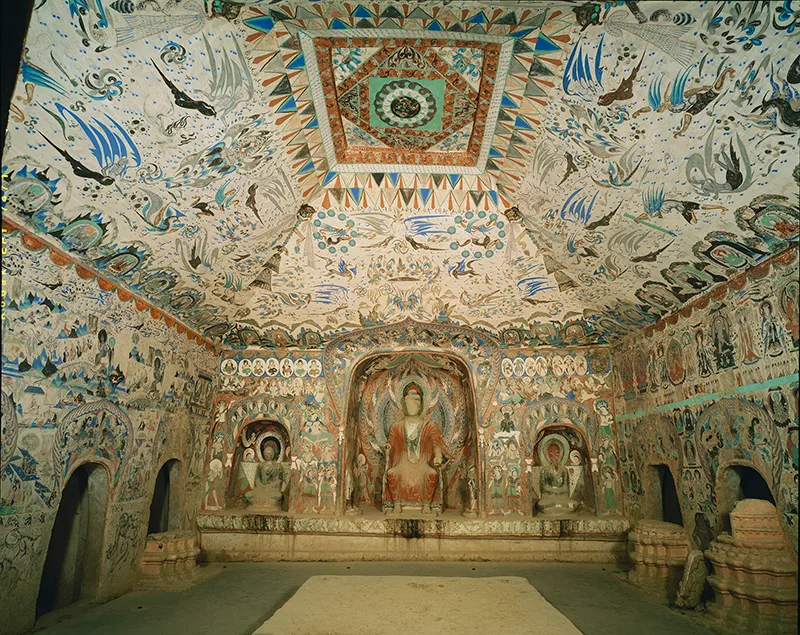
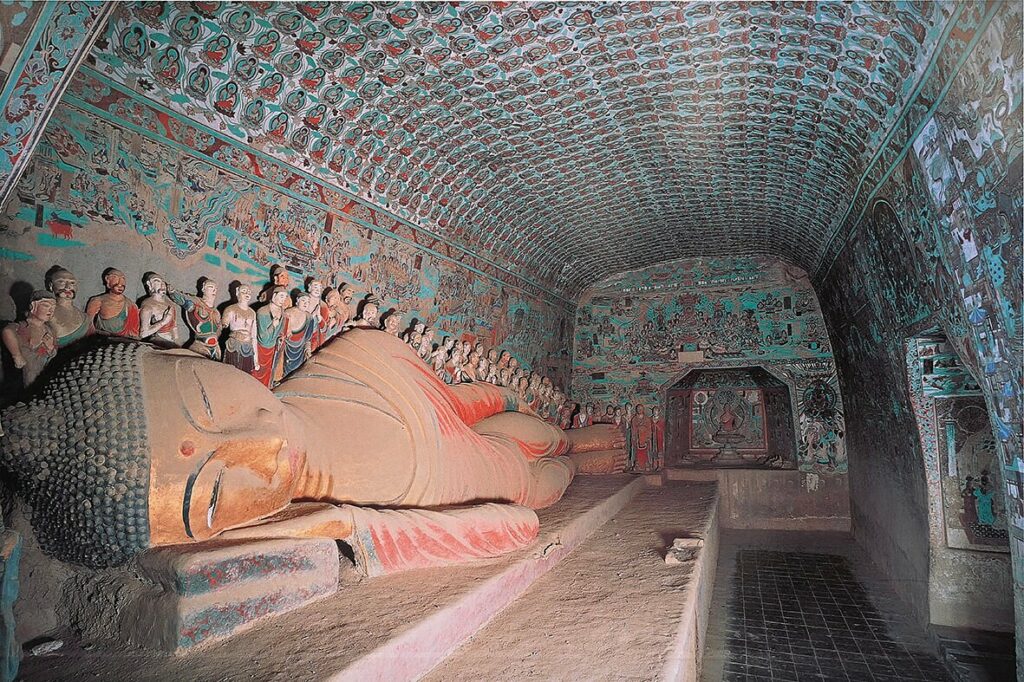
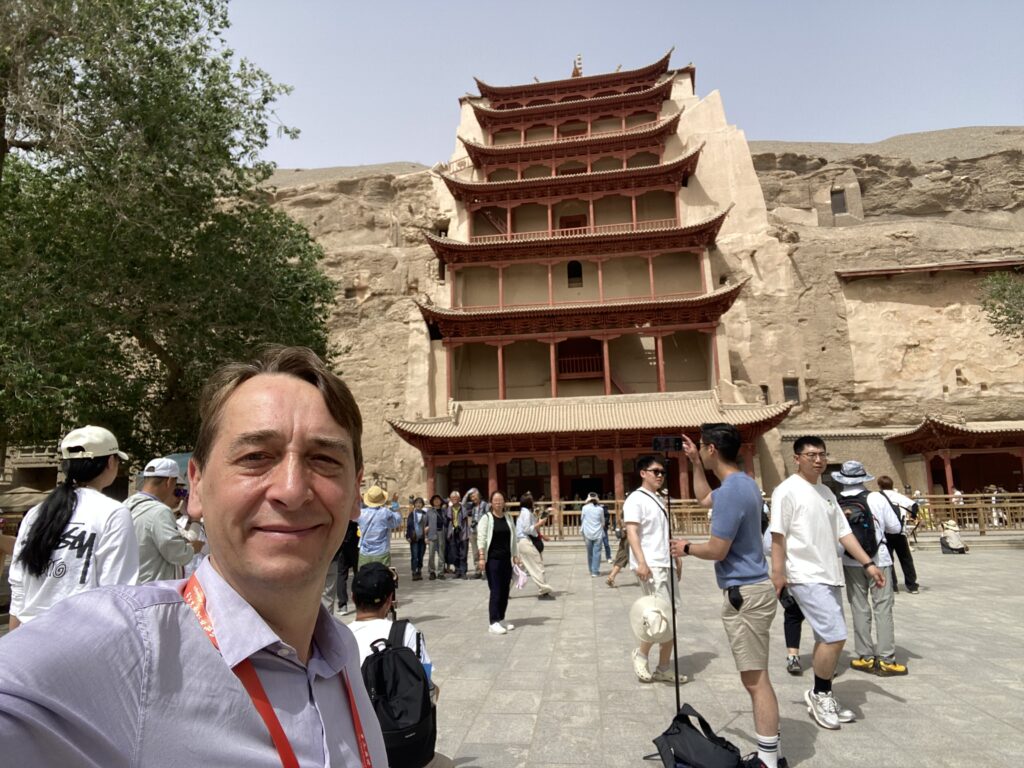
The Mogao Caves are located on the cliffs at the eastern foot of Mount Mingsha, 25 kilometers southeast of Dunhuang. Their construction began in the second year of the Jianyuan era of the ancient Qin Dynasty (366 AD). To date, 735 caves have been preserved. The site contains over 45,000 square meters of murals, more than 2,400 painted sculptures, five wooden cave roofs dating from the Tang and Song Dynasties, and over 50,000 cultural relics unearthed in the Library Cave, ranging from manuscripts to silk paintings dating from the Eastern Jin Dynasty to the early Northern Song Dynasty. As the oldest, best-preserved, and largest Buddhist cave complex in the world, it was designated one of the first Chinese sites to be inscribed on UNESCO’s World Heritage List in 1987. We were fortunate enough to visit several of these caves, including the oldest ones, which were exceptionally opened for the World Conference. These caves tell the story of the ancient Silk Road through art. Finally, we were able to see a gigantic 7th-century Maitreya, the Buddha of the Future, dating from the Tang Dynasty. This 35-meter-high statue, the largest in the Mogao Caves, was built using scaffolding whose remains are still visible. It makes a spectacular impression due to the contrast between its impressive height and the limited space one has to step back to view it.
A priority for China: green energy
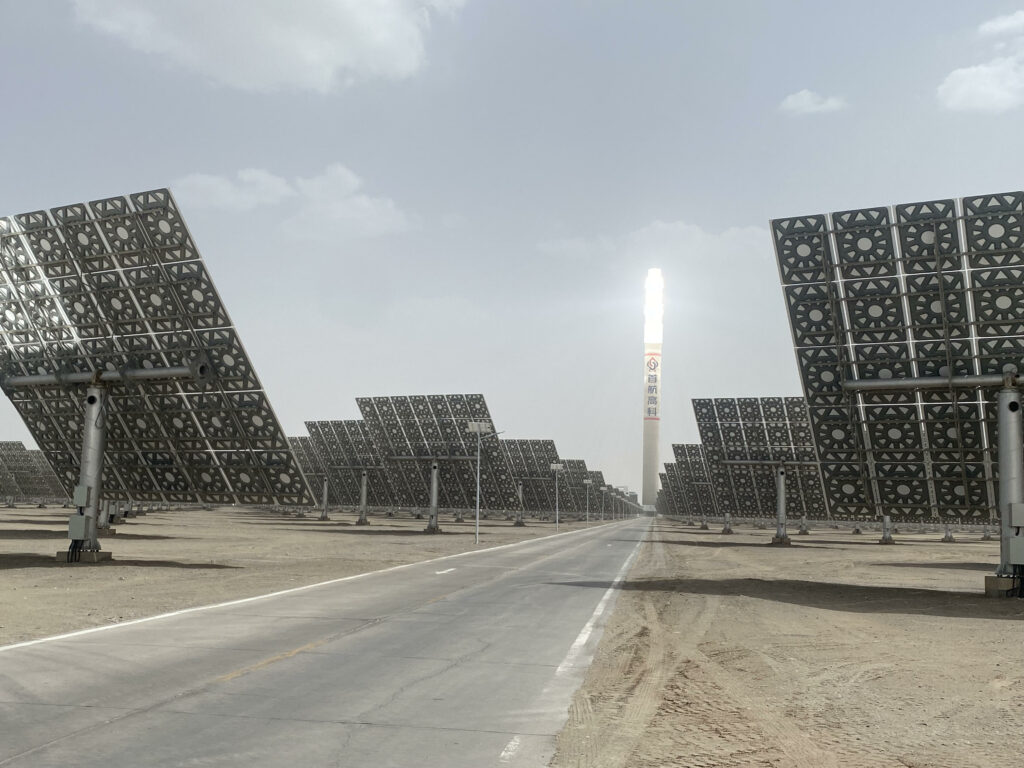
A visit to the Shouhang 100 MW tower solar thermal power plant project in Dunhuang was also arranged during our stay. Built by Shouhang High-Tech Energy Technology, this project represents an investment of 3 billion RMB (approximately 400 million euros). Covering an area of 6 square kilometers, it has a planned annual electricity production capacity of 390 million kWh. The power generation system mainly consists of a solar heat collection system and a power generation system. Key features include a 260-meter-high molten salt receiving tower and a thermal storage system equipped with both hot and cold molten salt tanks. The heliostat field comprises 12,000 mirrors, each with a reflective surface area of 115 square meters, bringing the total reflective surface area of the entire optical field to 1.38 million square meters. Under normal weather conditions, the plant is capable of producing electricity continuously, 24 hours a day. Officially connected to the grid on December 28, 2018, it is the largest commercial solar thermal power plant tower in China. For comparison, in France, relatively similar projects have been or are still being tested, such as the Odeillo solar furnace, 60 meters high with 63 heliostats (mirrors) for only 1 MW, dating back to the late 1960s! Another example is in the Pyrenees (Haute-Cerdagne), with an installation of 100,000 mirrors commissioned at the end of 2018, aiming to generate 20 GWh per year, equivalent to the electricity consumption of approximately 6,000 households. The said advantage compared to photovoltaics is that this energy is « free » and completely pollution-free.
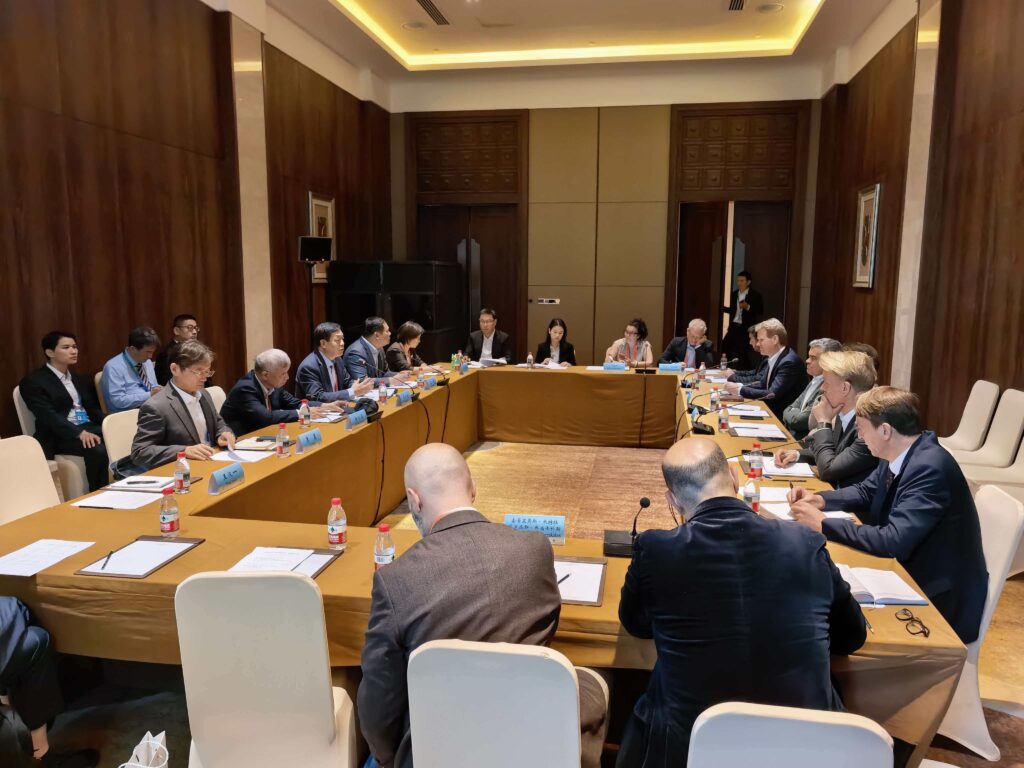
To conclude this first stage, we participated in a seminar on « China-European Union Relations in a Century of Global Change. » Each member of our delegation was able to contribute to the debate by sharing their perspective on China-EU relations, which proved very interesting given the diversity of the delegation’s political orientations (communists, a Gaullist, liberals, conservatives, etc.). This led to a lively exchange of opposing viewpoints, also highlighting the limitations of the European Union, because despite the differences of opinion, one thing is certain: the European Union elites who are betting on a policy of « decoupling » from China are far from being unanimously supported!

II. Wuhan, Hubei Province
The visit to Wuhan had two objectives: to showcase the revitalization of rural areas and to highlight cutting-edge companies in the fields of electric vehicles and humanoid robots. Located in central China, Hubei province has 61 million inhabitants. It is considered the inland crossroads of China, as it is the source of the Yangtze River, the largest river in China and the third largest in the world after the Amazon and the Nile. Stretching 6,400 kilometers, it flows through China from east to west. The city of Wuhan itself has nearly 13 million inhabitants.
Our trip began with a visit to Voyah Automotive Technology. Founded in 2021 as a smart electric vehicle technology company within the Dongfeng Group, Voyah Automotive primarily focuses on electric vehicle sales, automotive parts research and development, manufacturing, and technology promotion. The company employs 6,000 people and supports over 40,000 jobs across its entire industrial chain. In 2023, Voyah was included on the Forbes China New Unicorn list. By 2025, it had produced its 300,000th vehicle (the Voyah Taishan), delivered 150,169 vehicles that year, and launched the Voyah Zhuiguang L sedan, thus completing its range of three major product categories. Today, the company is beginning to expand its international network, and we should soon such vehicles, as those of BYD, in France.
NAO: a French memory
Imagine my surprise, during my next visit to Hubei Shengchuang Technology, to find an old French friend: NAO. A tragic story for France, unfortunately, as NAO is the small French humanoid robot that was a huge hit there during its initial presentations. Created in 2005 by a French startup, Aldebaran, this futuristic industrial project aimed to manufacture robots for the benefit of humankind, with the goal of marketing them to the general public as a « new species benevolent towards humans. » However, the project was short-lived, as it was subsequently sold to a Japanese company, Softbank. Aldebaran ultimately went bankrupt, with the Paris Commercial Court ordering its liquidation on June 2, 2025, forcing it to cease all operations and lay off its remaining 106 employees in France. China, which is investing heavily in humanoid robots, then acquired the company’s brand, technology, and robotic products. NAO has therefore become Chinese.
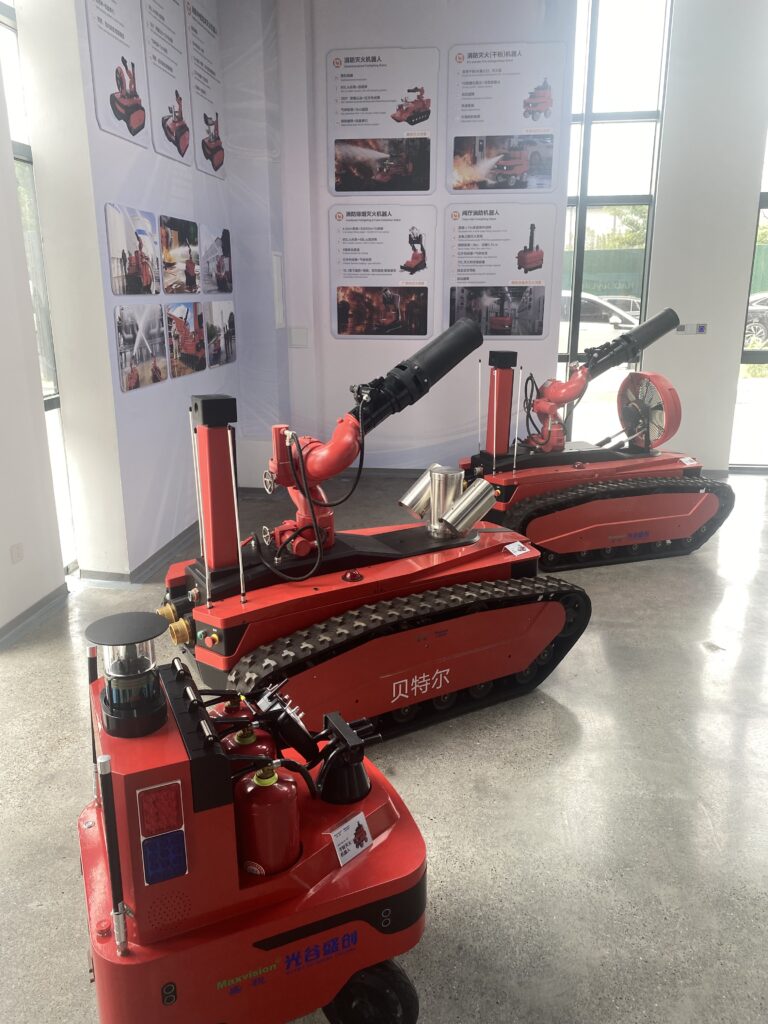
It’s interesting to note that in China, the presence of humanoid robots is commonplace, as the population is very receptive to being assisted by this type of robot, which is not yet the case in France. Thus, upon arrival at Beijing airport, it’s perfectly possible to order a coffee or fruit juice from a robot behind a glass partition, which does the job just as well as a person who could spend all day waiting for customers! The robot, for its part, never gets bored or tired. Similarly, in all the hotels we visited, robots brought orders placed from your room (drinks, meals, irons, newspapers, etc.). Starting from the hotel reception, the robot takes the elevators on its own and knocks on your door, thus preventing employees from making dozens of trips back and forth throughout the day. Humanoid robot technology is playing an increasingly important role in China, as we saw during our visit to Shanghai. Finally, at this robot factory, we were able to watch a football match between humanoid robots. Of course, Ousmane Dembélé and Lionel Messi aren’t likely to be beaten by a team like this anytime soon, but the technological feat remains impressive. Didn’t we recently see a robot beat humans in the Beijing marathon? But beyond the playful aspect of this endeavor, the primary objective is to assist people and intervene in critical situations. For example, we saw fully autonomous firefighting robots capable of intervening where human firefighters cannot, and in extremely delicate situations, thus saving lives without risking their own. The robots we saw can also monitor warehouses, parking lots, and other locations day and night, with direct links to the police in case of intrusion or theft. They can also clean buildings and offices with systems fully integrated into the building structure.


China: a model of Gaullism
We were then received by the Hubei authorities to learn how the national five-year plan policy is being implemented at the provincial level. Wuhan, which has always been a transit city due to its location along the Yangtze River, has implemented an industrial and tourism development policy designed to encourage people to stay. This policy is based on four main pillars: industrialization, urbanization, science and technology, and institutional modernization. In China, the five-year plan is seen as the culmination of a democratic process that starts at the grassroots level and addresses the issues at the top, where the government is responsible for finding solutions. Thus, indicators of well-being are constantly evaluated, such as life expectancy, changes in poverty and literacy rates, and the crime rate, to ensure the positive momentum of the reforms implemented by the central government. We already know that life expectancy in China has surpassed that of the United States, but it’s less well known that it also has one of the lowest crime rates and ranks 174th out of 185 countries in terms of the number of prisoners per 100,000 inhabitants in China, compared to 542 per 100,000 inhabitants in the United States! One might wonder which country is the police state in this equation!
As we were told, during the public consultations, over 31 million suggestions were submitted by the population. These were then sent to the authorities, sorted, and grouped by theme before being reviewed by expert committees on various topics (agriculture, health, infrastructure, etc.). If a proposal was accepted, it was then approved by the Central Committee of the Communist Party of China, which meets annually and decides on the projects to implement it. For example, in Hubei province, two projects (which we were later able to visit) helped develop tourism and enabled local farmers to significantly increase their incomes.
Mulan Park and Squirrel Park
This is the theme park dedicated to the heroine Mulan (whom apparently everyone knows except me) and a squirrel park. The Mulan Park, a bit like Puy du Fou in France, is a place that welcomes tourists and locals for sound and light shows, dance, and traditional Chinese music based on the legend of Mulan. The Chinese heroine of a legend tells how a young girl disguises herself as a man to take the place of her elderly father during a mobilization ordered by the Emperor of China to fight an unnamed kingdom. She fights successfully for many years before it is discovered that she is a woman. Some consider her the Chinese Joan of Arc, all things considered, of course. The poem that inspired this legend dates back to the Chinese medieval period, around the 5th century (3). But the interesting thing is that we were able to speak with farmers from the area surrounding the village of Dutang, where the park is located. They’ve been given stalls where they can sell their produce and sell kebabs (which everyone there loves), as well as souvenir shops. With over 2 million visitors a year, this park has become a true model and one of the pillars of Chinese planning, namely rural revitalization. It also houses a museum that recounts the story of Mulan. The same is true for the squirrel park, which we also visited, where you can see squirrels roaming everywhere. It’s a resort-style park where everyone can choose their preferred type of accommodation—Mongolian, Tibetan, Indian, Persian, etc.—and enjoy the attractions (like at Parc Astérix) and the shows offered in the evening.
Crash program for the development of public services
Before our visit to the Wuhan Museum, we had the opportunity to discover an example of public service development with Chinese characteristics. Community Park 66, located in a very popular neighborhood of Wuhan, aims to bring local residents together and meet their needs. Premises are made available to residents to create businesses, as well as offices for work. But it’s also a meeting place, with a canteen open every day that serves nearly 300 meals daily, including a free meal (soup and rice) for those with limited means. When we ate there, we experienced the mixing of generations, with elderly people playing the game of Go and young people learning by watching them. Park staff are also available to help people, with an on-site health center, and they can also assist with all kinds of administrative procedures, which, in the digital age, isn’t always easy for older people. Thus, an entire living space is being created, with the support of the State and the city’s businesses.
The bells of Marquis Yi of Zeng
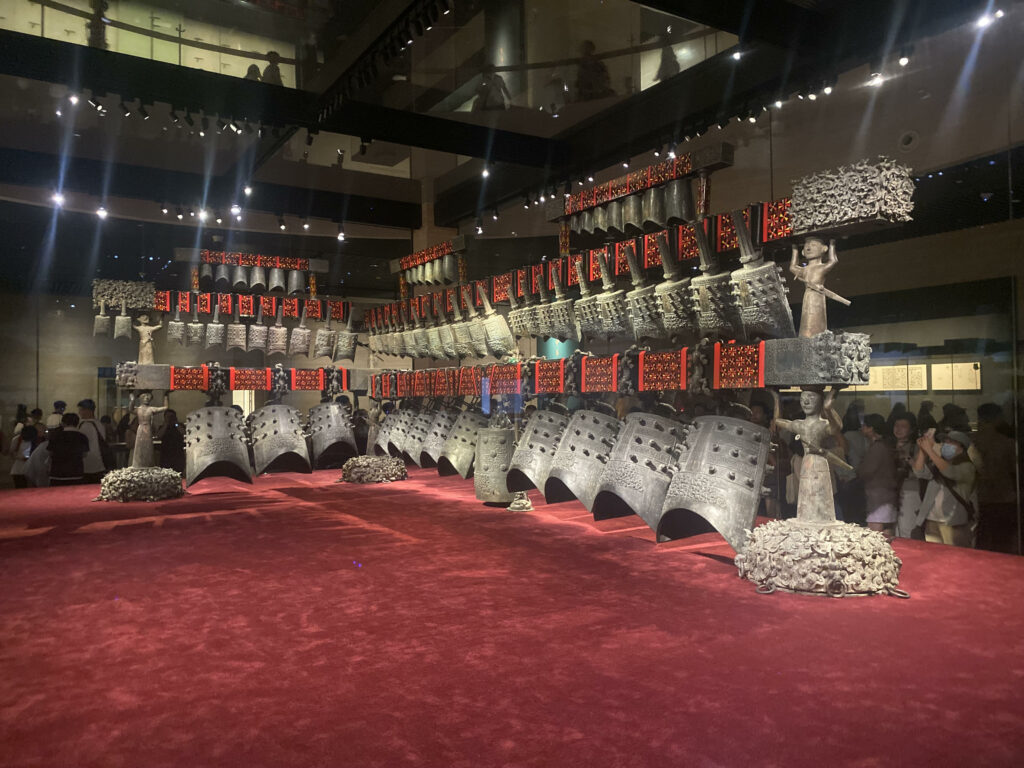
To conclude our visit to Wuhan, and before taking the high-speed train to Shanghai, we visited the city museum, accompanied by our enthusiastic and passionate guide, Rosaline. Built in 1953, this museum recounts the history of Chinese dynasties and their presence in Hubei province, with over 240,000 cultural relics dating back to the Zhou Dynasty (1046 BC – 256 BC), during which the Tianxia philosophy was developed.
Since it was impossible to visit the entire museum, our guide showed us the magnificent relics from the tomb of Marquis Yi of Zeng, and in particular, found intact in his tomb, the Bianzhong, a carillon of 65 bronze bells, considered one of the most astonishing archaeological discoveries of recent years. Weighing 2.5 tons, it is the heaviest musical instrument in the world. The bells are divided into eight groups according to their size and pitch. The ensemble is suspended in three rows on an L-shaped frame. The 19 niuzhong (button bells) on the top tier were used to produce clear, strong tones, the 33 yongzhong (handled bells) in the middle for the melody, and the 12 yongzhong on the bottom tier to accompany the melody. Dating back to 433 BC, it bears an inscription revealing that it was a gift from King Hui of the State of Chu. The most remarkable feature of these bells is that each can produce two different sounds. Even today, still sounding harmoniously, the instrument is capable of playing both Chinese and Western music spanning five and a half octaves. To hear it, see the link in footnote (4).
III. Shanghai
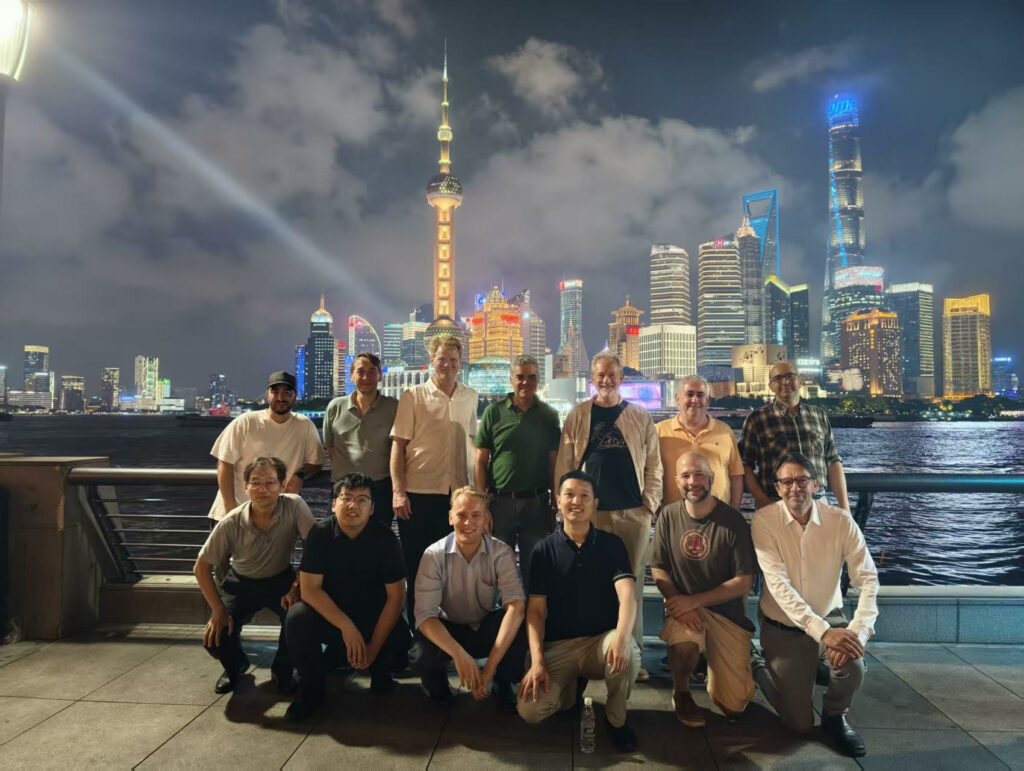
The final stop, Shanghai, by high-speed train, a source of pride for all of China, much like the French were proud when the first TGV was launched in France. Shanghai, a city of 27 million inhabitants and a financial center with communist characteristics!
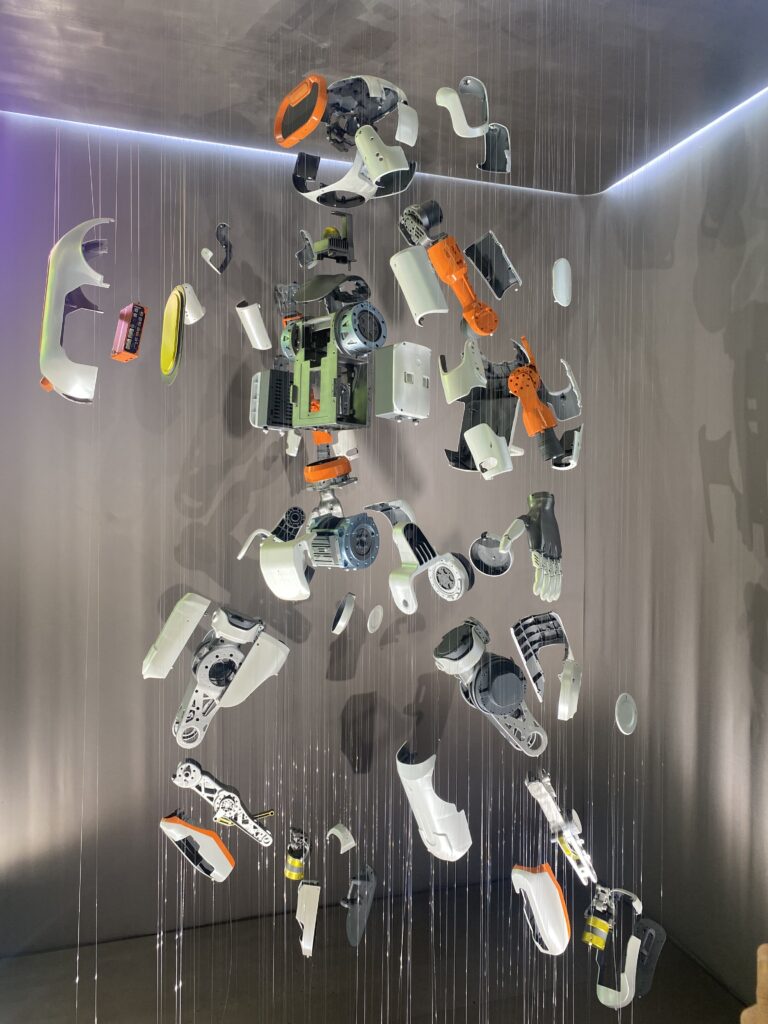
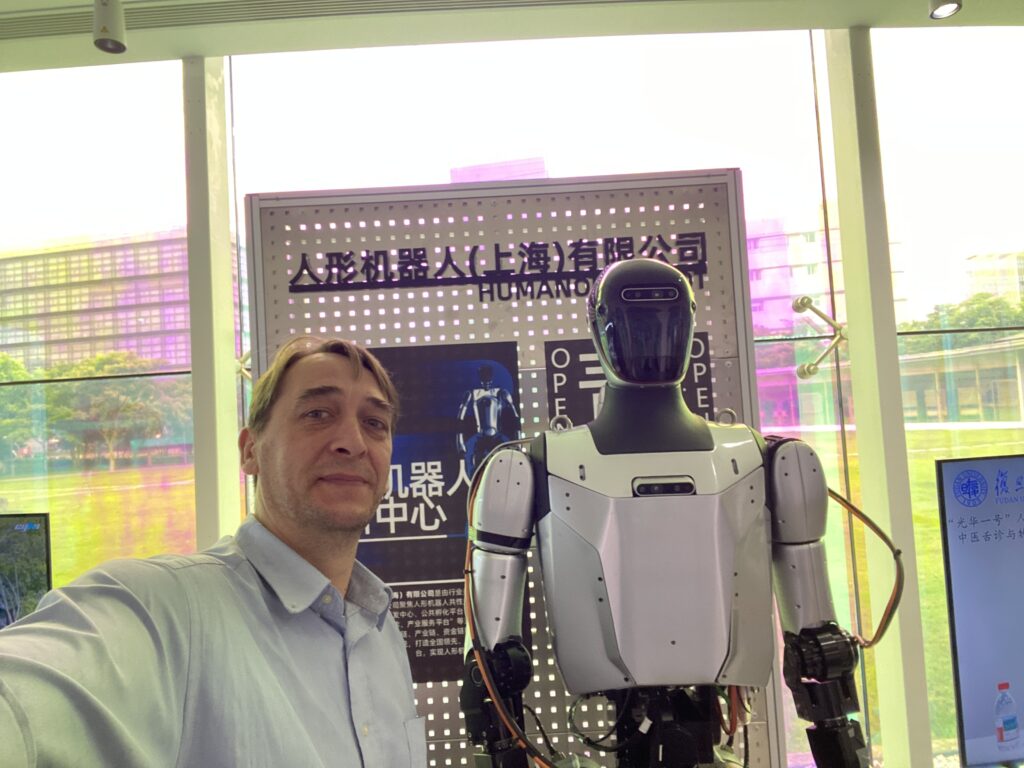
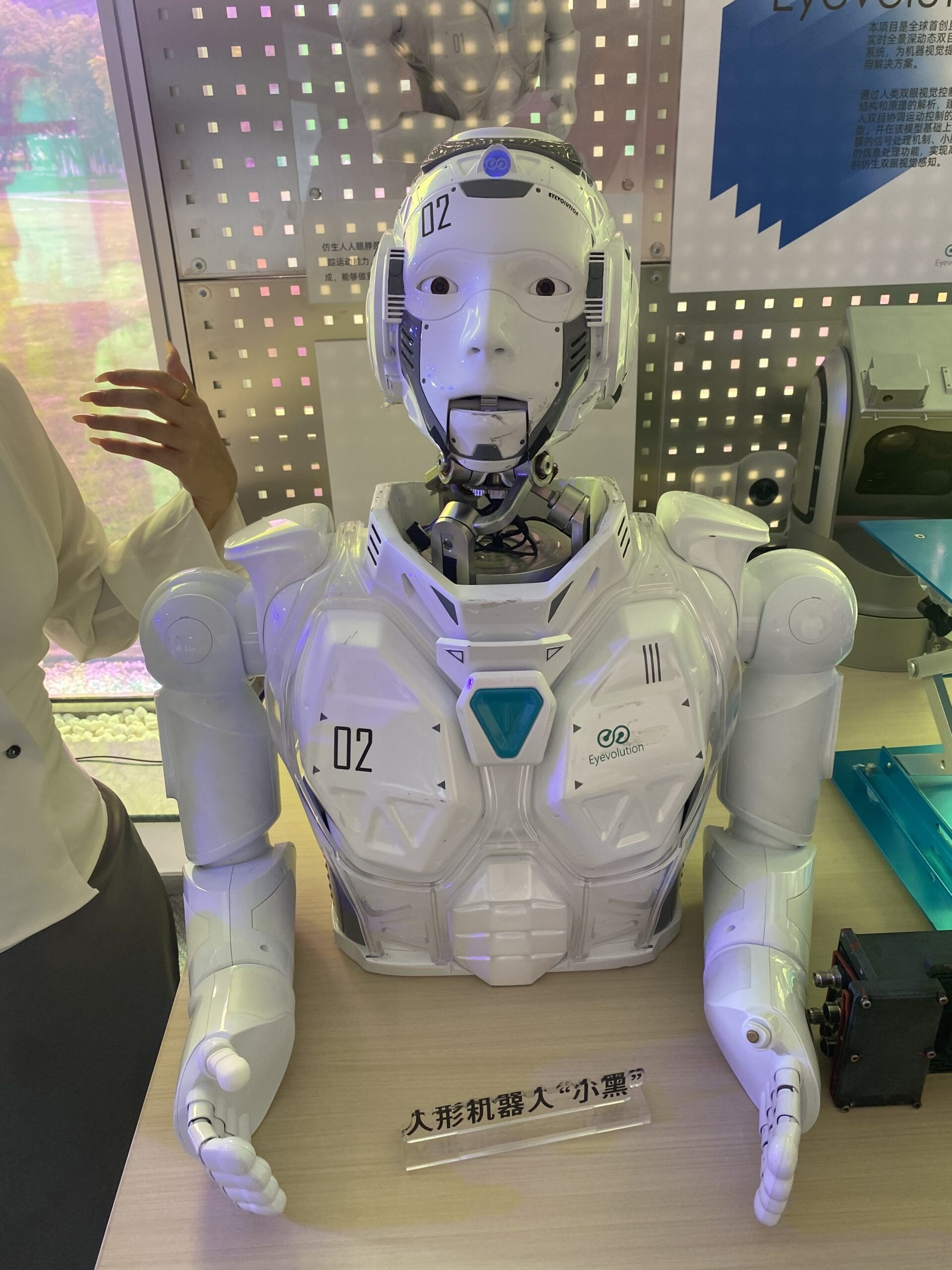
First, we visited the largest incubator for humanoid robot innovation, similar to the one in Wuhan, but even more advanced. These robots are capable of making medical diagnoses. For example, if you stick out your tongue in front of a robot, it can give you a diagnosis of your health, drawing on traditional Chinese medicine. Another robot analyzes your face, eyes, and skin to provide information about your health. Perhaps more playful is the robot dog for the blind, which replaces a pet to guide you wherever you want to go. Finally, and a bit more frightening, are the bodyguard and law enforcement robots, which, in the demonstrations we saw, achieved performance and agility approaching that of the Terminator (the film with Arnold Schwarzenegger). The humanoid robots developed in Shanghai are capable of dancing and practicing martial arts almost identically to humans. To understand this, just watch the completely crazy video in footnote (5). But let’s bring back a little bit of sweetness, they also make robots capable of playing the piano to calm spirits!
Shanghai Institute for International Studies (SIIS)
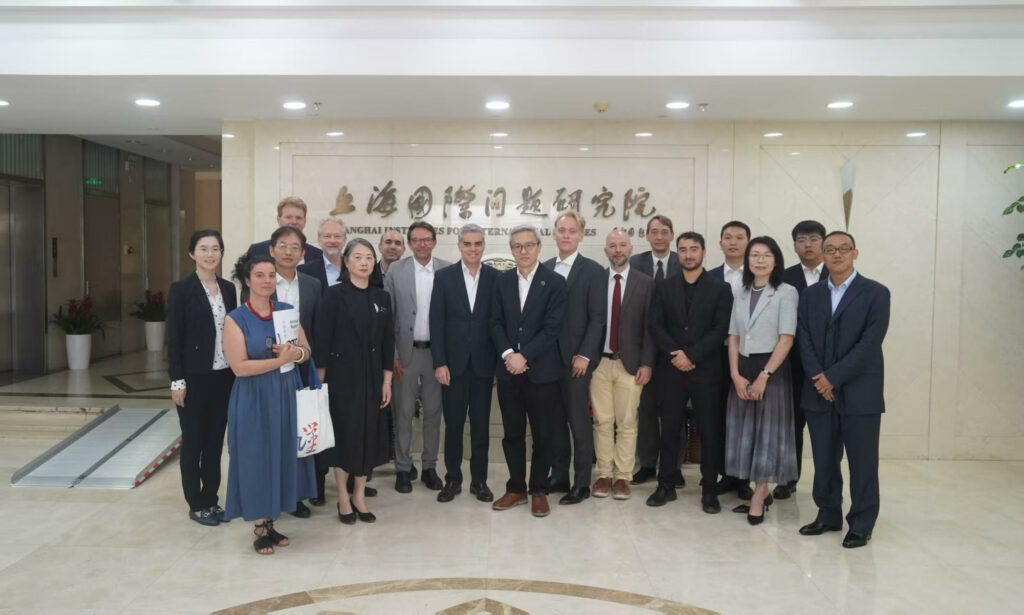
Another seminar on China-European Union relations was organized so that we could exchange ideas with the president of the Shanghai Institute for International Studies and his colleagues. Over the past six decades, the SIIS has played a crucial role in conducting strategic research, formulating policy recommendations, and contributing to the understanding of international politics, economics, security, and other related fields. It has become a major institution that informs and shapes China’s foreign policy and international engagement, recognized as one of the most influential think tanks in China and the world.
During this exchange, I was able to raise the issue of the international financial and monetary crisis. Indeed, a few days earlier, I had read in the Business supplement of the China Daily that the Shanghai municipality had published a set of recommendations aimed at reaching $8 trillion in the asset management market by 2030, representing a third of the entire country’s total. The stated objective is also to make yuan-denominated assets more attractive to international investors. Did someone say dedollarization?
So I asked whether, given the Western financial madness, with its two trillion dollars in financial assets of all kinds, the majority of which are merely speculative bubbles on the verge of bursting, and in a context where Western countries are heavily indebted and undergoing deindustrialization, China was anticipating a collapse of the global financial system and whether they themselves were assessing the risks of deregulated and uncontrolled finance.
The answer was that there was indeed a risk of a financial crisis, but that China did not want it for reasons of stability in the global economy. He did, however, specify—and this is what makes us dream here—that these assets are and will be developed for the sole purpose, and I quote, « of serving the nation’s new productive forces, » emphasizing that finance must develop to support « the real economy. » Thus, to avoid potential financial catastrophes, « asset managers should conduct in-depth research in cutting-edge industrial sectors in order to implement a diversified and interdisciplinary asset allocation system. » Liberalism with communist characteristics.
History of Chinese resistance and the creation of the Communist Party
To conclude this trip, already very rich in discoveries and encounters, we visited the Museum of Chinese Resistance to Japanese Aggression during World War II and the Museum of the History of the Communist Party, which was established between Shanghai and Montargis (France)!
It is indeed little known that for China, World War II began in 1931 and that Japanese barbarity was matched only by that of the Nazis in Europe. The war in China began with the September 18 Incident, 1931, and ended on September 3, 1945, with Japan’s surrender, lasting 14 years. China paid a heavy price, with over 35 million dead and wounded. On September 18, 1931, the Japanese army intentionally detonated a railway line near Liutiao Lake and bombarded Chinese army positions. This event still marks the beginning of the Chinese people’s anti-fascist war. The other defining event of this war is the so-called Nanjing Massacre, perpetrated in 1937, which represents one of the most terrifying manifestations of human barbarity: systematic rape, mass murder, summary executions, and torture inflicted on defenseless civilians by the Japanese army. This massacre remains etched in the collective memory to this day, and recent visits by Japanese officials to the cemeteries of some of these war criminals are considered an affront by China and have fueled growing concern about Japan’s rearmament and its near-integration into NATO. It is important to remember that while collaborationist France allowed Japanese troops to establish military bases in northern Indochina to attack China, Free France and the Chinese resistance each acted on their own front to liberate the world from fascism.
Today, one can still see in this museum the portrait of Robert Jacquinot de Besange, whose birth name was Emile Jacquinot (1878 – 1946). This French Jesuit priest, missionary in China and professor of science at Aurora University in Shanghai, is known for having implemented a model of demilitarized security zones, which made it possible to save some 300,000 to 500,000 Chinese during the Second Sino-Japanese War.
The final stop on this adventure is a visit to the Museum of the History of the Chinese Communist Party, which was established in Shanghai in July 1921 by Mao Zedong and his comrades. Many of them were in France at the time, as part of the “work-study” program, and more specifically in Montargis, including Zhou Enlai, Deng Xiaoping, Cai Hesen, and his wife Xiang Jingyu. To learn more about this history, I invite you to visit the museum dedicated to that history in Montargis.
In conclusion, traveling through China today is like living during the post-war boom in France: medium and long-term economic planning, the establishment of a public health and social protection service for the poorest, investment by a strategic state in science and technology (aerospace, nuclear, etc.), the development of a railway network covering the whole country, material progress and an increase in life expectancy in remarkable proportions, but also the pride of a population building the future, believing and working so that their children and grandchildren will have a better future.
This is a return to the past, but also, we hope, a vision of the future, if France and Europe ever pull themselves together and commit to a world where other countries are not places to plunder or systemic rivals, but partners, friends, in order to establish this new architecture of security and mutual development that our Schiller Institute has been calling for years and that echoes Xi Jinping’s proposal for a global civilization initiative.
We all live on the same planet; our destiny must be shared. As Martin Luther King so aptly put it: « We must learn to live together as brothers or perish together as fools. »


(1) To learn more about this famous poem in Wuhan: https://poems.mahacinasthana.com/fr/gushi/huang-he-lou/
(2) Our delegation of 11 people consisted of:
- Vicente Azpitarte Pérez, Spanish senator, People’s Party, Christian Democrat
- Jeppe Soe, former member of the Danish Parliament, liberal, centre-right
- Nick Nierschalke, researcher at the Austrian Institute for Europe and Security
- Marc Sanganee, editor-in-chief of Arbejderen , Denmark
- Niels Hahn, researcher at the Centre for Global Security, Peace and Development, Denmark
- Nils Hakan Julander, founder of the Dissidentklubben, Sweden
- Francisco José Moral Gutiérrez, Director General of the Friends of the Alhambra Foundation, Spain
- Dionysos Skliris, journalist at To Vima , Greece
- Sotioros Mitralexis Georgakakos, analyst at Naftemporiki , Greece
- Herta Manenti, researcher at “Transform! Europe”, Italy
(3) The Ballad of Mulan: https://clio-texte.clionautes.org/ballade-mulan-1832.html
(4) Marquis Yi’s Chimes: https://www.youtube.com/watch?v=lfuAKvgjUV8&t=36s
(5) Video of humanoid robots: https://www.youtube.com/watch?v=JFEGUSChZOw