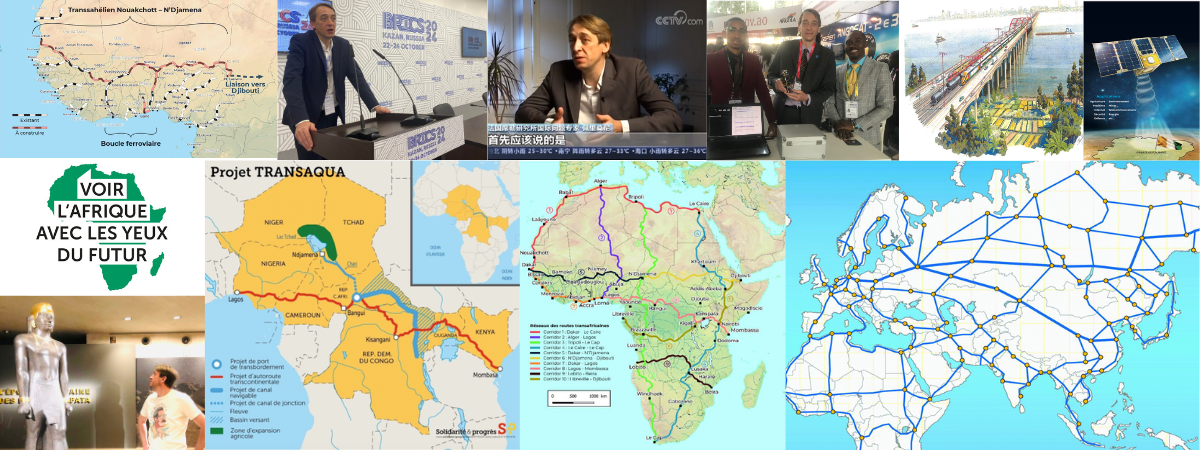
 Voir le Monde avec les yeux du futur
(Google translation) Report on Our Trip to China in December 2023
“Though I lack the resolve of heroes,
Nor am I like the people of the world.
From the mountaintops where I gaze out toward the four oceans,
Tyrants are not worth mentioning.
The nobles may boast of their nobility;
I regard them all as dust.
The poor may despise themselves:
I value them as much as a thousand pounds of gold.” (1)
Introduction: Who Still Dreams of Going to the United States?
Part 1: Beijing
Part 2: Nanning
Part 3: Shenzhen
Conclusion
Introduction: Who Still Dreams of Going to the United States?
From McDonald’s to Marvel, from Michael Jackson to Hollywood: we French and Europeans have been immersed—if not drowned—in American culture. And the rest of the world didn’t exist. So how many of us haven’t dreamed of going to the United States? BUT if we look at the reality of this country today, what is it? Let’s take a quick look:
– Since the beginning of 2023, 773 people have been killed and 2,593 injured in 643 mass shootings—even deadlier than in 2021, when there were an average of 2.16 shootings per day;
– In 2022, 1,200 people were killed by the police, or more than 3 per day;
– Between February 2021 and February 2022, 82,000 people died of drug overdoses, or more than 230 per day!
So much for the social and security record: near-systemic violence and racism. Let’s move on to infrastructure. One example suffices: 70,000 American bridges are classified as structurally deficient. Not a week goes by without one of them collapsing. And this, even though, according to experts, it would take only $188 billion over 20 years to maintain them, or just $9 billion a year.
So who still dreams of going to the United States?
For my part, while I dreamed of going there when I was younger, for several years now my focus has been on China. And now it’s a reality, thanks to an invitation from the International Department of the Central Committee of the Communist Party of China. I knew, from research, that China had become the true world leader in terms of physical economy, according to the criteria defined by Lyndon LaRouche. I knew that China had the longest high-speed rail network in the world (over 20,000 km), even including, for the first time, magnetic levitation trains – and soon, the Hyperloop project, which could reach speeds of up to 1,000 km/h. Meanwhile, in the United States, there isn’t a single kilometer of high-speed rail!
China has already achieved several breakthroughs in the most advanced fields of science and technology, particularly in nuclear and space exploration, with the launch of Zhurong, its first rover to Mars (a successful mission on its first attempt), the mission to the far side of the Moon involving the Jade Rabbit, Yutu, and the sustained thermonuclear fusion reaction at 70 million degrees Celsius for 17 minutes and 36 seconds, also a world first.
China has also launched the Belt and Road Initiative and the China-Africa Cooperation Summits, which have already helped lift millions of Africans out of poverty through infrastructure development and the training of local workers in numerous sectors (2):
– Burundi: The importation of hybrid rice and the training provided by Chinese farmers have increased national production by 19,000 tons, enabling hundreds of farmers to increase their income, feed their families, and pay for their children’s education;
– Senegal: The construction of more than 250 wells and 1,800 kilometers of pipelines has finally given thousands of villagers access to clean drinking water while increasing their agricultural production;
– Rwanda: More than 35,000 farmers have received agricultural training to increase their production capacity.
And there are many examples like these. Consider the railway between Nairobi and Mombasa, which has contributed enormously to Kenya’s development; the creation of the disease prevention center in Addis Ababa, Ethiopia; the provision of satellite television to 10,000 African villages in 25 countries; the Luban training workshops; and so on.
The Belt and Road Initiative now involves more than 150 countries and 30 international organizations worldwide. In addition, there are numerous initiatives for peace around the world, whether in the Ukraine/Russia conflict or between Israel and Palestine, where others (like the United States) prefer to fan the flames.
So who wouldn’t dream of going to China today?
1: Beijing
A delegation of 10 people was invited to China by the International Department of the Central Committee of the Communist Party of China (IDPCC) as part of exchanges between the CPC and its « left-wing friends » from around the world. It should be noted that every year, the Communist Party of China organizes a major international conference attended by more than 160 political parties worldwide – mostly communist parties, but not exclusively. Many other parties, such as ours, Solidarity and Progress, are also involved. In the Gaullist tradition, we have not only always recognized the People’s Republic of China as a trusted partner, but we also consider its « socialist policy with Chinese characteristics » to be much closer to the legacy of Jaurès than that of current European social democrats, who have submitted to the existing neoliberal and anti-social order.
This delegation was therefore composed of three people from Solidarity and Progress, including Jacques Cheminade as guest of honor, two people from the Peace Movement, two from the National Communist Association, one from the Communist Party of Luxembourg, a Luxembourgish couple including the author of a book on China and an expert on Xizang, and finally a Belgian blogger (3). For a week, we exchanged ideas with those involved in China’s development in three different regions: first in the capital Beijing, then in Nanning in the Guangxi Zhuang Autonomous Region, and finally in the Guangdong region, where the city of Shenzhen is located, a symbol of the opening up initiated by Deng Xiaoping.
Our first stop was Beijing, with its 22 million inhabitants and its famous Forbidden City, where we discovered China’s history, architectural treasures, and traditions. Built between 1406 and 1420, the « Purple Forbidden City, » its real name (in Chinese, « Zijin Cheng »), was the main residence of the last Chinese emperors, under the Ming and then the Qing dynasties. It dazzles with its palaces of gold and jade, its marble courtyards, and its imposing bronze lions. So why « purple »? « Cheng » refers to the fortified city, and « Zi » means purple, in reference to the North Star, which the Chinese call « Ziwei Xing » (little purple star) and which they once considered the center of the sky around which everything else is organized. This was also the case for the emperor. Purple is therefore omnipresent within the complex. Finally, « Jin » means forbidden, because only the emperor, his family, and his loyal followers were allowed to enter the city! Fortunately, this is no longer the case… The day after our visit, Beijing was completely covered in snow: I therefore cannot resist including in note (4) the link to a video of the Forbidden City covered in snow, which expresses, much better than words, the beauty of Chinese cultural heritage.
The following day, we participated in a discussion with Ms. Chen Ying, a researcher at the Institute for Ecological Civilization of the Chinese Academy of Social Sciences (CASS), on the topic of « The Double Carbon Target and China’s Green Development. » Although we have always denounced the fallacious reasoning of proponents of the theory of human-caused global warming, as well as the pitfalls of renewable energy, this meeting revealed to us China’s proactive approach and its colossal efforts in reducing air pollution. Ms. Chen Ying has contributed to the IPCC reports for years and had just returned from COP28. China’s Double Carbon goal is to reach peak CO2 emissions before 2030 and carbon neutrality by 2060. We learned on this occasion that coal, which accounted for 70% of China’s energy mix in 2011, has been reduced to 56% since 2021. Solar and wind power reached 1,322 GW in 2023, representing 48.8% of total energy for the first time and surpassing coal. China has become the world’s second-largest exporter of electric vehicles: it manufactures 77% of global batteries and accounts for 60% of sales. Ms. Chen Ying emphasized the issue of waste, which, according to figures, represents a third of total global anthropogenic emissions. A national day of environmental action against waste has been established in China to raise awareness, notably through interventions in schools.
During our discussion, we were able to broach the subject of nuclear power, which our host hadn’t mentioned. This technology is indeed renewable and remains, to this day, the most efficient energy source in terms of energy density (per capita, per unit area, and per gram of material supplied). China is deeply committed to nuclear development. Even more significantly, as mentioned earlier, it is working intensively to realize humanity’s dream: creating a sun on Earth through controlled thermonuclear fusion, which will be a global revolution in the energy sector. As President Xi Jinping (or « General Secretary, » as communist officials there call him) more poetically put it: one day, through hard work, « the mountains will be green, the sky blue, and the waters clear. »
Another meeting: Ms. Chen Huaifan, Head of the IDPCC’s Western Europe Office, focused on common Sino-European strategic choices. In 2022, China and Europe were each other’s second-largest trading partners. According to official Chinese statistics, their trade reached $847.3 billion in 2022, a 2.4% year-on-year increase, meaning that China and the EU traded over $1.6 million every minute!
Last year, Europe invested $12.1 billion in China, a significant increase of 70% year-on-year. China’s investments in Europe during the same period amounted to $11.1 billion, a 21% year-on-year increase, with new investments in sectors including renewable energy, automobiles, and machinery.
However, we were able to express our reservations regarding EU policies, and even explain our desire to withdraw from it. The PRC’s policy remains and will remain one of openness and « win-win partnership » with other countries and organizations worldwide, China being the only country to have enshrined in its Constitution the necessity of pursuing a peaceful path in its international relations. The country is aware that some in Europe consider it a systemic rival and are attempting a policy of decoupling from it. China also acknowledges that NATO is not known for its pacifist policies. Nevertheless, it believes that through the work of our respective organizations, we can strive to make Europe more independent of the confrontational Atlanticist policy and to foster the emergence of a multipolar world. On the issue of Sino-African relations, China will maintain its policy of non-interference, unconditional aid, and mutual development without any hegemonic ambitions, having never been, throughout its history, a colonizing power, but having itself been colonized.
On the third day, we were able to visit the Chinese Communist Party Museum, which traces the history of the party from the Long March to the present day. Here is a translation of the plaque at the museum’s entrance, which summarizes its essence:
“The Communist Party of China was founded in July 1921. During the period of the New Democratic Revolution (1921–1949), the Party’s main task was to oppose imperialism, feudalism, and bureaucratic capitalism, to pursue national independence and the liberation of the people, and to create the basic social conditions necessary for the realization of national rejuvenation. The CPC led the Chinese people through an arduous and heroic 28-year struggle, achieved the great victory of the New Democratic Revolution, and founded the People’s Republic of China, where the people are the true masters of the country.” This brought an end to China’s history as a semi-colonial and semi-feudal society, to the domination of a handful of exploiters over the working people, to the state of total disunity that reigned in ancient China, to all the unequal treaties imposed on our country by foreign powers, and to all the privileges enjoyed by imperialist powers within our territory, thus marking the great transformation of the country from a multi-millennial feudal autocracy to a people’s democracy. Through tenacious struggle, the Party and the people showed the world that the Chinese people must rise up and that the era in which the Chinese nation could be oppressed and mistreated was over and would never return. This marked the beginning of a new era in China’s development. “
After the Opium Wars of the 1840s and the aggression of Western countries, including France and Great Britain, China had indeed been reduced to a semi-colonial and semi-feudal society. To understand this, I invite you to read Victor Hugo’s letter, which is highly respected in China, entitled “The Sack of the Summer Palace,” and which I have included in note 5 below.”
Finally, it is worth noting that the history of the creation of the Chinese Communist Party is closely linked to our own. From 1902 to 1927, 4,000 young Chinese intellectuals came to study and work in our country under the Work-Study Program (6). Among them were Deng Xiaoping, Zhou Enlai, Cai Hesen, and other founders of the CCP.
We concluded our brief visit to Beijing with an official meeting with Mr. Guo Yezhou, Vice Minister of the IDPCC, who thanked us for our visit and our commitment to building friendly exchanges and cooperation with China.
2: Nanning
Nanning is located in southeastern China, more than 2,000 km from Beijing. It has over 8 million inhabitants and is the capital of the Guangxi Zhuang Region, one of China’s five autonomous regions. It is characterized by its diverse ethnic makeup, including the Zhuang, Yao, Miao, Dong, Mu Lao, Mao Nan, Hui, Jing, Yi, Shui, and Ge Lao. Ethnic minorities make up approximately 38% of the 57 million people living in the Guangxi Zhuang Region. The Zhuang ethnic group, from which the region takes its name, is the majority (32%) and is the largest ethnic minority in the country. Bordering Vietnam, Nanning is home to the permanent headquarters of ASEAN Expo, the Association of Southeast Asian Nations, which comprises 10 member countries. It’s worth noting that during our visit, Xi Jinping was in Vietnam to sign an agreement strengthening strategic cooperation, and he subsequently traveled to Guangxi and Nanning itself! He urged the region to invest more in the development of its coastal areas, which are the starting point of the Maritime Silk Road. More specifically, he called for accelerating the implementation of the Digital Silk Road to enhance connectivity among ASEAN member states, particularly with Vietnam, Guangxi’s leading trading partner since 1999. He also met with sugarcane farmers, pledging to provide them with more resources to invest in agricultural science and technology to increase their production and income, given the highly competitive international environment. Finally, he emphasized the importance of Guangxi’s multi-ethnic character in fostering a strong sense of national unity, transcending differences, for « unity without uniformity. »
We were able to visit several sites related to rural revitalization and community dialogue in the region. First, the Nankao Wetland Park, a symbol of the government’s « sponge city » program. Surrounded by hills and crisscrossed by rivers, the regional capital used to experience difficult times during the rainy season. « There was a time when we would lose trees after the soil was washed away by heavy rains, and then muddy water would flow everywhere on the road, » an environmental engineer from the park told us. In 2015, a project was launched to lay approximately 8.17 km of permeable asphalt pavement around the park’s central lake. A cycle was created, as the rainwater absorbed by the pavement was then used to irrigate the plants. According to a national directive, thanks to the sponge city construction program, 70% of rainfall will be absorbed and used locally. Nanning invested over 11 billion yuan (US$1.62 billion) in this project. It transformed a completely unsanitary area of the city, where garbage accumulated in the river and generated foul odors, into a clean and lush park where residents can now exercise in a healthy environment every morning. This was achieved thanks to a system of trenches and plants capable of filtering the water, thus significantly reducing the river’s load. Sponge city construction projects in various urban areas have brought tangible benefits to residents, including reduced flooding during the rainy season, the cleaning of polluted urban rivers, and the increase of green spaces.
Next, we visited the Zhongguancun Innovation Demonstration Base (a kind of giant business incubator), which houses over 900 SMEs across all sectors. It includes the production of agricultural machinery, the manufacture of drones for agriculture, and the use of artificial intelligence for controlling banana or bougainvillea harvests.
Following these two visits, we were able to hold a working meeting with officials from the Guangxi Rural Revitalization Administration and the Commission for Ethnic and Religious Affairs. This meeting provided us with several answers regarding China’s poverty alleviation policy. China is, in fact, the first country to have eradicated extreme poverty, according to the United Nations’ own criteria. It is also the nation contributing the most to poverty reduction worldwide. Mr. Deng Miaohong, Director of the Guangxi Foreign Investment Project Development Center for Rural Revitalization, detailed the entire policy implemented to combat this scourge of poverty in rural China. An army of civil servants—nearly 250,000—was mobilized to identify the needs of the population in more than 5,000 villages considered extremely poor. A comprehensive set of poverty indicators (98) divided into 18 categories was established to target aid. Each family was visited to answer questions such as: What is the general standard of living? Is there drinking water? Electricity? Are the children in school? Do they have any health problems? Does the house have appliances? A car? Does the farmer own agricultural machinery? How many hectares does he own? Etc.
Following this initiative, more than 6 million poor people were identified to receive direct state aid. Monitoring mechanisms were put in place to prevent a return to poverty. As part of a three-year rural revitalization program, the areas concerned benefited from the development of transport, health, and education infrastructure, the modernization of agricultural tools, and the establishment of local industries. All of this was made possible by the principle: « the richest provinces help the poorest provinces, » as will be seen with the example of Shenzhen.
Still in the Zhuang region of Guangxi, we visited a nursing home with an average resident age of 85, managed through a public-private partnership (PPP). It’s part of a pilot project for the region and for the whole of China. Residents receive round-the-clock care, and a wide range of activities are offered: traditional karaoke is available, especially for those with Alzheimer’s who often remember songs from Chinese culture. Workshops are also offered for playing traditional musical instruments, the famous Zhuang drums, calligraphy, and even billiards!
With the modernization of China, life expectancy has increased considerably. It’s important to know that, conversely, with opiate overdoses, heart attacks, mass shootings, Covid deaths, and so on, life expectancy in the United States fell in 2021 for the second consecutive year, setting Americans back 25 years and placing them behind China for the first time! Life expectancy in China reached 78.2 years, compared to 76.1 years for the United States. France remains ahead, with 82.4 years for both men and women.
Our last day in the autonomous province allowed us to visit a flower park boasting hundreds of different orchids; our Chinese friends displayed undisguised enthusiasm for parks and forests! Qingxiu Mountain Park is laid out with 18 hills, both large and small. Green Hill, Phoenix Hill, and Hat Hill are the most famous. The highest peak reaches 289 meters. In total, this large natural area covers 4.07 km², of which 1.4 km² is entirely water. One can even see immense cycads there. Some of them are over a hundred, even a thousand years old (the oldest is 1360 years old). It’s worth noting that 24.2% of China’s land area is forested, according to Ms. Chen Ying (the researcher at the Institute for Ecological Civilization of the Chinese Academy of Social Sciences, mentioned above).
Finally, we visited the regional museum of national minorities, with its famous bronze drums, one of the region’s special features, as mentioned at the beginning of this chapter. The visit ended with a convivial meal at a restaurant run by one of the national minorities, the Yao, during which we were treated to a traditional ritual and songs. The ritual involves pouring a liquor into the guests’ mouths through four small cascading vessels, gently reaching our throats, all while our ears are gently pinched. This signifies that we are now members of the family and, as such, should return regularly to share more delicious meals.
3: Shenzhen
The city of Shenzhen is located north of Hong Kong, in Guangdong province, which borders Guangxi. It is part of the Pearl River Delta megalopolis and represents one of the symbols of the opening-up policy launched by Deng Xiaoping in 1979. A small fishing village at the time, it has become, in 40 years, one of the most modern and wealthiest cities in the country. The first special economic zone established to attract foreign capital, it has earned the nickname « China’s Silicon Valley. » And indeed, it is home to the headquarters of Tencent, Huawei, and BYD, among the largest companies, whose offices and demonstration centers we had the opportunity to visit, as we will see. Shenzhen has 18 million inhabitants (more than twice the population of New York City) and skyscrapers that are all taller than the next. Shenzhen is also home to the fifth tallest tower in the world.
And the average age there is 32.5 years!
It is also one of the cities that dedicates the largest share of its budget to Research and Development (R&D), representing 5.46% of its gross domestic product in 2021. In fact, it has registered the most patents per capita.
Our first visit took place at the headquarters of Tencent, China’s equivalent of Google. Founded in 1998, the company is now one of the world’s largest in the field of internet and mobile services, and social network development. Indeed, it developed WeChat, as well as the QQ instant messaging service, the most widely used in China, with 550 million users. Its applications are used by hundreds of millions of Chinese people. Tencent is now at the forefront of all technologies related to the digital world, as well as in the fields of artificial intelligence and data storage (cloud computing, DNA data storage). It is even extending its scope to the management of autonomous vehicles. Tencent is currently working on driverless truck operation in mines and other construction sites. It also develops a wide range of multimedia content, including video games, films and series, animated programs, and more.
Finally, like all businesses, Shenzhen participates in the « Common Prosperity » program launched by the central government, which involves allocating a portion of its profits, including those of the city of Shenzhen, to the poorest provinces in China. As Ms. Cao Saixian, Director General of the Shenzhen Foreign Affairs Office, explained to us during a luncheon, the city allocates nearly 6.4 billion yuan annually to 22 districts in Guangxi (the province we had visited earlier), representing 20% of these districts’ budgets!
Ms. Cao Saixian and Mr. Li Jiashan, from the Shenzhen City Revitalization, Cooperation and Exchange Office, helped us understand the municipality’s projects within the framework of the aforementioned « Common Prosperity » program. Shenzhen directly assists more than 100 districts (the most remote of which is over 5,500 km away) in nine regions of China. The city has implemented a program called « Shenzhen Cities » that creates entirely new housing in villages that previously lacked access to drinking water and electricity. While in Shenzhen the price per square meter is 100,000 yuan (almost €1,300/m²), in these Shenzhen Cities it is only 100 yuan (€13). The city has also implemented a water storage program in what are called « stone deserts, » areas where rainfall is regular but where infrastructure was previously lacking.
As part of this program, the municipality has also established textile industries, which have created over 6,000 jobs in the neighboring Guangxi region alone. It has also helped farmers increase their silkworm production. Every year, Shenzhen companies that hire people from the neighboring province receive awards, and the city offers a range of free vocational training institutes and scholarships for young people who wish to move there to study and work. Finally, every June 30th, a philanthropy day is held to raise funds for poverty alleviation efforts in the country.
It’s worth noting that Tencent, one of the wealthiest companies in the country, alone dedicates 50 billion yuan (6 billion euros) annually to this community prosperity program!
Shenzhen also hosts a renowned food festival every year, which attracts over 200,000 people from the city. The goal is to showcase the specialties of Guangxi and increase sales for its farmers.
Next, we visited Huawei’s demonstration center, a company that needs no introduction in France. Also one of the world’s largest companies, it employs over 200,000 people in more than 170 countries. Its revenue, which reached €92.4 billion in 2022 (!), is constantly increasing. Like many Chinese companies in Shenzhen, Huawei dedicates a quarter of its profits to R&D, amounting to €23 billion in 2022. With over 35,000 partners worldwide, it has become an expert in data capture, transmission, and utilization. It is also present in the fields of mining, ports, public utilities, smart agriculture, and more. We were able to see how Huawei offers its services for smart ports. Thus, unlike traditional ports where workers still have to remain in cranes for hours to unload thousands of containers, in smart ports, workers are no longer in the cranes but in offices, warm and comfortable, in a remote control booth. Several ports of this type already exist in China, in Tianjin, near Beijing, and in Shenzhen, of course. Similar projects are also underway in other countries, such as Thailand and the Philippines. In Tianjin, more than 70 trucks are already being driven by artificial intelligence, meaning they are driverless. As for public services, all electricity, water, traffic, and security management is controlled from offices that detect any anomalies across the entire city! If you have an accident with another driver, there’s no point in trying to cheat, because the city’s cameras have already seen everything, which is quite different from Paris!
The visits continued, beginning with BYD (Build Your Dream), China’s leading electric vehicle brand. With over 500,000 employees, it achieved a turnover of €54 billion in 2022, representing a 56% increase! Founded in 1995 with the production of the first rechargeable batteries, the company quickly opened its first subsidiaries abroad, in the Netherlands, in 1996. By the early 2000s, it had become a supplier for Motorola. In 2003, it entered the automotive industry, producing the first plug-in hybrid vehicle (DENZA D9) in 2005. Finally, it ventured into rail transit with Skyrail and the Sky Shuttle Line. The Skyrail system, unveiled in 2016 as a test track at BYD’s headquarters in Shenzhen, is a newcomer to the global urban transportation market. The company invested 5 billion yuan and five years of research and development in Skyrail. The first system to enter commercial operation, in September 2017, was in Yinchuan, the capital of the Ningxia Hui Autonomous Region in northwest China.
BYD has sold more than 85,000 electric buses in 400 cities across 70 countries, including 80% of London’s iconic red buses, which have now been converted to 100% electric. BYD is also known for its innovation policy, with over 90,000 engineers filing 10,000 patents—an average of 19 patents per day in a single year! In 2022, the automaker set a new record by producing 6 million electric vehicles, surpassing Tesla. It goes without saying that 100% of the buses and taxis in Shenzhen are electric and manufactured by BYD.
Next, we had the opportunity to visit the international vaccine innovation center, established as part of a strategic partnership between the Chinese government and the French company Sanofi. This partnership was signed by President Macron during his visit to China in 2019 and is one of the five pillars of Sino-French cooperation. Sanofi’s first vaccine factory in China was built in Shenzhen. Now, 100% of the pertussis vaccines, which are mandatory in China, are manufactured by Sanofi. This is also the case for a quarter of the flu vaccines. Sanofi is helping to implement an integrated system, from R&D to distribution (including the refrigerated transport chain at 4°C), reaching even the most remote areas of China. A drone has even been developed (and is already operational in the country) to deliver the necessary quantity of vaccines to the most isolated villages. They’re already considering « Vacbot » robot booths, which offer self-service vaccinations in public places via robots, after an appointment is booked on a smartphone!
To conclude our trip, we visited a household waste treatment plant near the Shenzhen Autonomous Port, as well as the Shenzhen Opening Museum, which recounts the entire history of this economic miracle initiated by Deng Xiaoping.
Conclusion: Peace Through Mutual Development
China still considers itself a developing country. But when one sees the overall progress already achieved, both in the fight against extreme poverty at the local level and in technological breakthroughs in the most advanced fields, one can easily say that it has become the world’s leading economic power. In just a few decades, China has become the world’s economic engine and a model for the BRICS+ (11 nations). It has become Africa’s leading trading partner, and its Belt and Road Initiative now unites more than 170 countries worldwide. In the diplomatic arena, it is at the forefront of peace proposals and, like our partners at the Schiller Institute, has proposed the creation of a new architecture for global security and development.
The Tianxia philosophy, which states that we all live under the same sky, is at the heart of President Xi Jinping’s policy of a « shared future for all mankind. » This trip, far from showing us a perfect China, revealed a whole host of successes as well as pilot projects geared towards the common good. There is still a long way to go, but the momentum of progress and solidarity is undeniably present. Despite those who advocate war and financial speculation, despite those who preach a clash of civilizations, despite those who seek to divide and rule, China proposes a policy of mutual development, China proposes a multipolar world based on win-win cooperation, China proposes a dialogue of cultures.
“Firm within and flexible without, humility is fertile” is the definition of the 15th hexagram of the I Ching, the Book of Changes, written over 3,000 years ago. It is represented at the top with the symbol of the earth and at the bottom with the symbol of the mountain. This hexagram happens to correspond quite well to what one has seen in China: an extraordinary patience (flexibility) in the face of external attacks and an inner confidence (firmness) regarding one’s own future and that of the world. The new name for peace is mutual economic development; it is up to us Europeans to understand its full power and avoid the mistakes of the 20th century.
1: Excerpt from a poem by Qin Shi Huang of the Qin Dynasty (265-419) on historical themes. (Source: Anthology of Classical Chinese Poetry, Gallimard, edited by Paul Demiéville)
2: Source: For a Better World: A Human Rights Perspective Review of the Last Decade of Joint Pursuit of the Belt and Road Initiative, by the China Foundation for Human Rights Development and Xinhua News Agency. Published December 7, 2023. Link: https://english.news.cn/20231207/e599e960f0024f0cb474638cd6465b35/c.html
Also recommended is the book *Seeing Africa with the Eyes of the Future*, by Sébastien Périmony, on Sino-African cooperation.
3: Here are the various resources for following the members of the delegation:
The Peace Movement ; The National Communist Association (ANC); The Luxembourg Communist Party ; The Belgian blogger.
4: https://www.xiaohongshu.com/discovery/item/65767c1e000000003a00c2d5?app_platform=ios&app_version=8.17&author_share=1&share_from_user_hidden=true&type=video&xhsshare=WeixinSession&appuid=565d9f1b03eb8476e5768f63&apptime=1702327852
5: Victor Hugo: « The Sack of the Summer Palace »: https://www.monde-diplomatique.fr/2004/10/HUGO/11563
6: This whole story is This story is told at the Franco-Chinese Friendship Museum in Montargis, whose website is: https://www.tourismeloiret.com/fr/diffusio/visites/musee-historique-de-l-amitie-franco-chinoise-montargis_TFOPCUCEN045V5019PT
One comment
Pingback: La Chine : terre de progrès et de solidarité - Voir le Monde avec les yeux du futur